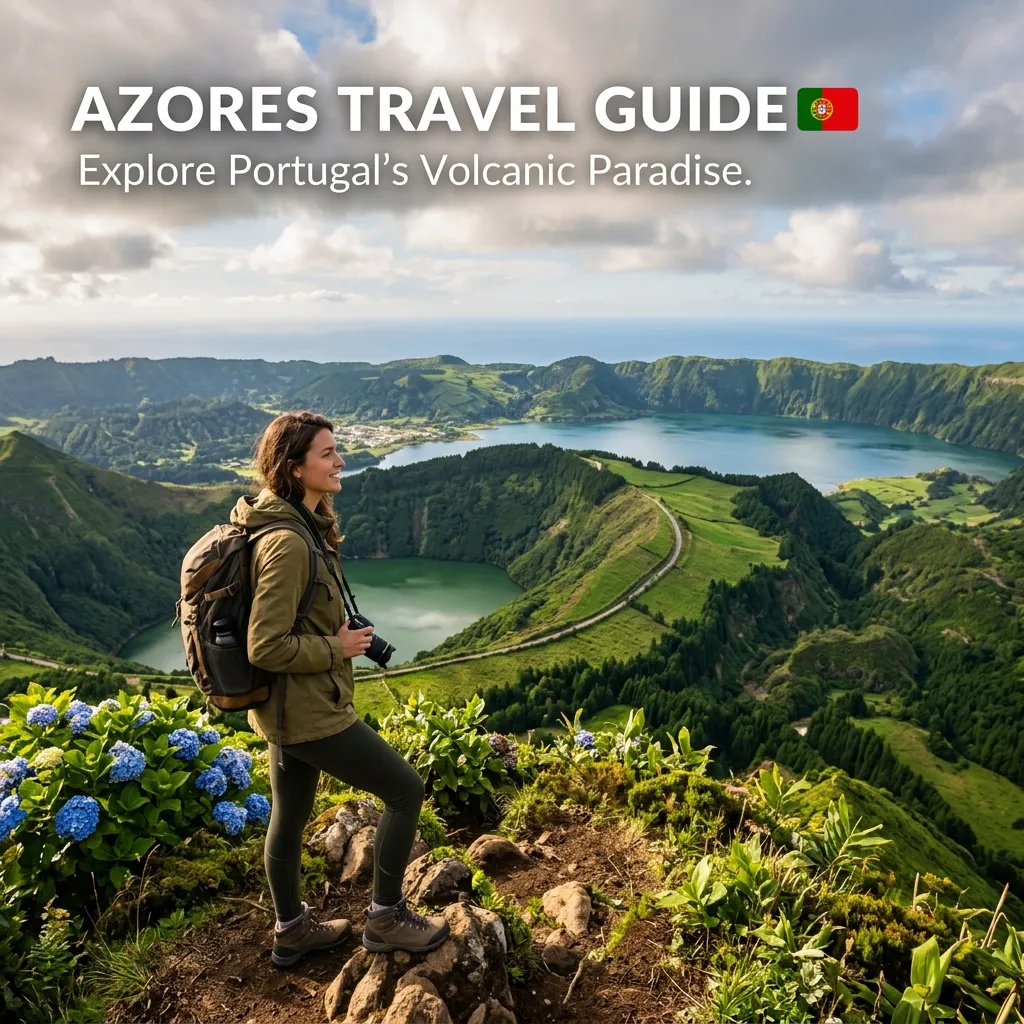
The Azores Travel Guide helps you plan a slower, greener Atlantic escape where volcanic landscapes, whale watching, hiking trails, and island-hopping create a trip that feels both peaceful and adventurous.
Why the Azores should be on your list
This Azores Travel Guide starts with the simplest reason to visit: the islands feel alive. The Azores are a nine-island Portuguese archipelago in the middle of the Atlantic, and official tourism pages describe them as a place of nature in its purest state, with volcanic scenery, lakes, hot springs, and one of the world’s great whale-watching environments. That combination makes the Azores stand out for travelers who want fresh air, open space, and a destination that feels active without feeling rushed.
Another reason this Azores Travel Guide matters is that the islands suit different travel personalities. Couples can find quiet viewpoints, families can build gentle outdoor days, young travelers can stretch a budget with nature-heavy plans, and outdoor lovers can fill a week with trails, oceans, and crater lakes. The value of the Azores is not just scenery; it is how easily the scenery supports a slow, rewarding trip.
What makes the Azores unique
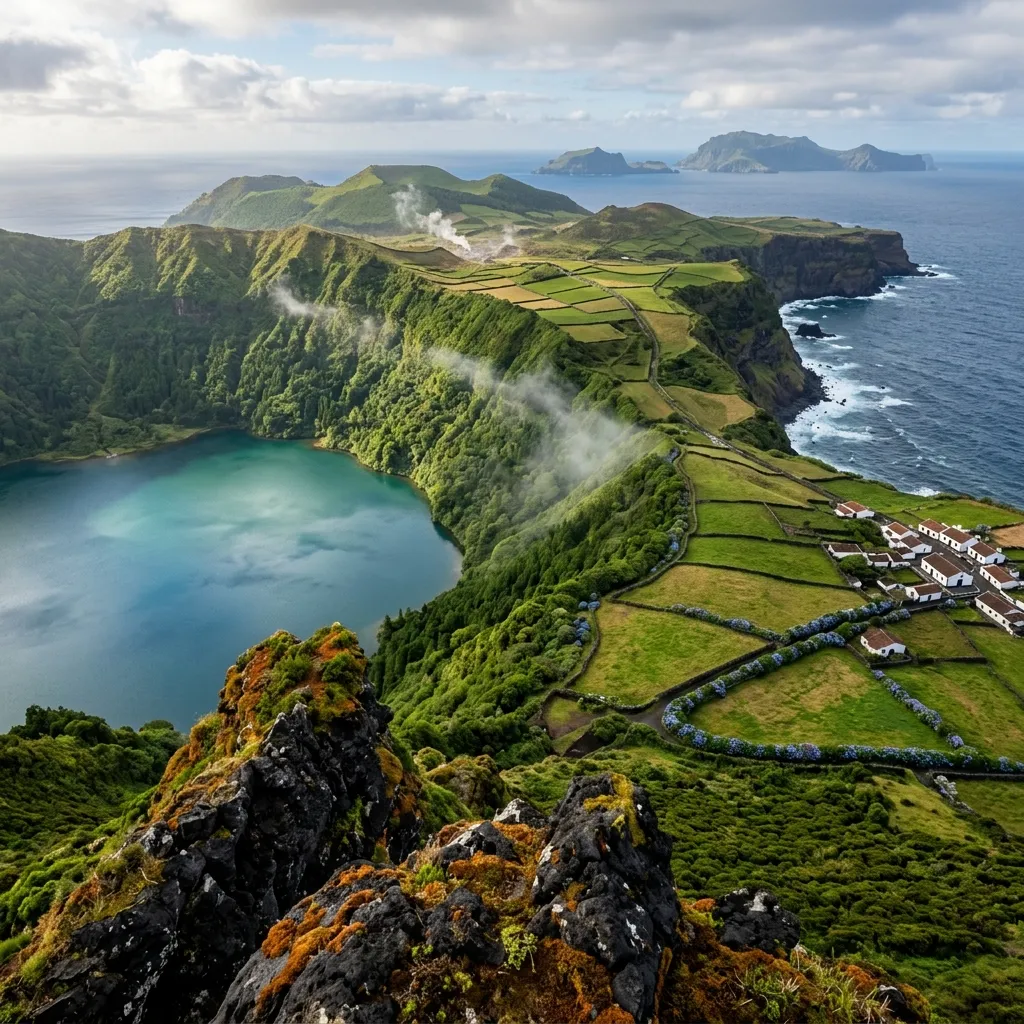
The Azores Travel Guide is different from most Portugal travel content because these islands are not a city break or a standard beach holiday. They are a volcanic region with dry calderas, crater lakes, fumarolic fields, hot springs, caves, and underwater geothermal activity. Visit Portugal describes the archipelago as a place where the landscape is shaped by volcanic cavities and crater lakes, while Visit Azores emphasizes geotourism as one of its core experiences.
That matters because the Azores Travel Guide is really a guide to choosing your pace. You can hike in the morning, soak in thermal waters later, and spend the evening watching the light change over a crater lake or a harbor. The islands reward travelers who like natural variety more than fast sightseeing. That is part of why they feel so restorative.
Best time to visit
A practical Azores Travel Guide should tell you that the climate is mild, but the experience changes by season. Visit Portugal notes that the Azorean climate allows trail walking in any season, with winter bringing lusher greens and waterfalls, while spring and summer bring more flowers. The official guidance also notes that the Azorean mist can appear at any time and then quickly clear, which is part of the islands’ character.
For travelers who care about water activities, this Azores Travel Guide should also point out that summer is especially strong for diving and clearer conditions. Visit Azores says the best time for diving is generally between June and September, when air and water temperatures are higher, rainfall is lower, and waters are calmer and clearer. Whale watching, however, is excellent year-round, with blue whales visible practically all year round and many other species more frequent in summer.
How to reach the islands
The Azores Travel Guide also needs a logistics section because the islands are remote in the Atlantic. Visit Portugal says SATA Azores Airlines operates regular flights between all the islands of the Azores and between the Azores, Madeira, mainland Portugal, and some international destinations. That makes air travel the easiest and most flexible way to move around the archipelago.
This Azores Travel Guide should also set expectations around island hopping. The official tourism materials reference convenient inter-island air connections, which is important because the best route often depends on which islands you want to pair together. For travelers planning a multi-island trip, it is smarter to think in terms of groups, not all nine islands at once.
Which islands fit which traveler
The Azores Travel Guide becomes easier once you understand that each island has its own personality. São Miguel is the green island and home to major lagoons such as Sete Cidades and Furnas; Pico is the mountain island with Portugal’s highest peak; Faial is a central triangle island; Corvo is the smallest island and a true volcanic structure; and São Miguel often becomes the best first stop for many visitors.
A good Azores Travel Guide does not push every island equally. Instead, it matches the destination to the traveler. São Miguel is ideal for first-timers and mixed-interest trips. Pico works well for mountain, wine, and whale-watching travelers. Faial suits island-hopping and scenic viewpoints. Corvo is tiny, dramatic, and best for travelers who love remote volcanic landscapes.
A smart 7-day structure
This Azores Travel Guide works best if you think of the trip as a rhythm rather than a checklist. A balanced first-time itinerary often gives more time to São Miguel, plus one additional island if you want variety. That structure fits the way the islands are described by official tourism sources: nature-first, outdoors-oriented, and best enjoyed with time for trails, viewpoints, and water experiences.
For example, the Azores Travel Guide can start with São Miguel for crater lakes and thermal areas, then move to Pico or Faial for a different volcanic landscape and an inter-island feel. That approach lets you see the range of the archipelago without spending too much time in transit. It also keeps the trip from feeling fragmented.
Nature experiences that define the trip
The Azores Travel Guide would be incomplete without hiking, because the islands are built for it. Visit Azores highlights hiking, geotourism, biking, bird watching, canyoning, kayaking, diving, whale watching, and yachting as major experiences. Visit Azores Trails also says the archipelago has a network of 79 homologated walking trails, which gives families, couples, and solo travelers plenty of options.
What makes this Azores Travel Guide so useful is that the experiences are not isolated from the landscape; they are part of it. Trails often lead to crater views, lagoons, and cliffs. Boat trips become wildlife experiences. Thermal springs become part of the volcanic story. The islands are designed by nature to make ordinary travel feel textured and memorable.
São Miguel: the most versatile island
In this Azores Travel Guide, São Miguel deserves special attention because it is the most versatile island for first-time visitors. Visit Portugal describes it as the green island and specifically points to its great lagoons, including the famous twin lakes in the crater of Sete Cidades. The island also includes Furnas, another major area for trails and thermal experiences.
A practical Azores Travel Guide should also mention that São Miguel works very well for different travel styles. You can use it for scenic drives, hot springs, easy hikes, and wildlife outings. Visit Azores notes that cetaceans can be observed year-round there, and some operators also offer kayaking, stand-up paddling, geological tours, bird watching, and bike rides.
Pico: for mountain lovers and dramatic scenery
The Azores Travel Guide becomes more adventurous on Pico. Visit Portugal says Pico is the second-largest island and home to Portugal’s highest mountain, also called Pico, at 2,351 meters above sea level. The island is often called the Mountain Island and is one of the central triangle islands, just a short distance from Faial.
This Azores Travel Guide should recommend Pico to travelers who like striking scenery, hiking, and a strong volcanic identity. The island works well when you want a trip that feels more rugged and less polished, while still remaining accessible through official tourism routes and inter-island connections.
Faial and the triangle islands
The Azores Travel Guide also benefits from including Faial because it is one of the best places to understand the central group of the archipelago. Visit Portugal describes Faial as a cosmopolitan island with views across the triangle islands, and Visit Azores notes that Faial, Pico, and São Jorge form the “triangle” region. That geographic setup makes island-hopping easier to imagine.
In an Azores Travel Guide, Faial is useful for travelers who want a mix of seascapes, viewpoints, and a less overwhelming base. It is a strong candidate for a multi-island route because its location makes it a natural connector between other central islands.
Corvo and the quieter edge of the archipelago

The Azores Travel Guide should not ignore Corvo, even though it is the smallest island. Visit Azores Trails says it is the smallest island, with mild temperatures and a very compact land area, while Visit Azores also describes it as a volcano-island with a caldera at the top and secondary volcanic cones. For travelers who want solitude and raw volcanic character, Corvo is special.
A thoughtful Azores Travel Guide frames Corvo as a destination for travelers who care more about atmosphere than volume of activities. It is the kind of place that deepens the trip’s emotional range, especially for people who enjoy remote and elemental landscapes.
Whale watching and marine life
The Azores Travel Guide would be incomplete without marine life. Visit Portugal calls the region one of the largest whale sanctuaries in the world, and Visit Azores says blue whales can be seen practically all year round, just a few miles off the coast. That is one of the biggest reasons the islands appeal to nature-focused travelers.
This Azores Travel Guide should also note that many cetacean species are present, with some more frequent in summer and blue whales often easier to sight in late winter. That gives travelers a clear reason to think about season, but it also reassures them that marine wildlife is not a niche feature; it is one of the region’s defining experiences.
Hiking and trails
The Azores Travel Guide should lean heavily on trails because the islands are one of Europe’s great walking destinations. Visit Azores Trails promotes the archipelago as ideal for walking holidays, and Visit Portugal emphasizes that the mild climate makes trail walking possible in any season. The official trail network includes 79 homologated routes, which is a lot of variety for a compact island group.
For travelers, this Azores Travel Guide means one thing: you do not need intense expedition skills to enjoy the landscape. You can choose easy scenic walks, moderate trails, or more ambitious hikes depending on your pace. That flexibility is one of the islands’ greatest strengths.
Hot springs, lakes, and volcanic calm
A good Azores Travel Guide should explain that the islands are not only dramatic, they are soothing. Visit Azores and Visit Portugal both highlight crater lakes, fumarolic fields, thermal springs, and volcanic features that make the landscape feel restorative. São Miguel’s Furnas area is a great example, combining walks, hot springs, and scenic valley views.
That is why this Azores Travel Guide is so appealing to travelers who want recovery as well as adventure. The islands offer a rare blend of movement and relaxation, where a day can include a hike, a lake view, and a thermal soak without feeling crowded or artificial.
Where family travel fits in
This Azores Travel Guide also works for families, especially if the family likes nature and does not mind moving at a slower pace. The islands offer easy wildlife encounters, scenic drives, boat trips, and outdoor spaces that can keep a range of ages engaged without forcing the trip into an amusement-park style.
For those comparing Nature-Based Family Vacations elsewhere, the Azores fit naturally into that category because the trip is built around the landscape itself. That means children can explore while adults still feel that the trip has depth and beauty. The calm rhythm makes the archipelago especially good for families who prefer meaningful outdoor days over high-energy attractions.
If you are deciding between different kinds of coastal trips, the Azores can also overlap with Family Beach Vacations, but in a more rugged and scenic way than a typical resort coast. The beaches and shoreline experiences here are part of a bigger volcanic system, which makes the family experience feel more distinctive.
Where budget travelers fit in
The Azores Travel Guide can absolutely work for value-conscious travelers. A nature-heavy trip often gives strong value because hiking, viewpoints, and scenic drives can fill a day without heavy spending. Official tourism pages also show that the islands are built for outdoor experiences, which helps travelers get more out of less.
This is where Youth Travel on a Budget fits naturally into the Azores Travel Guide. Younger travelers can stretch money by choosing simple lodgings, using walking trails, focusing on one or two islands, and building the itinerary around nature rather than expensive attractions. The islands reward that style because the landscape itself is the main event.
Where to stay
The Azores Travel Guide should recommend staying near the activities you care about most. If you want trail access and crater lakes, a base on São Miguel makes sense. If you want mountain views or whale watching, Pico can be a strong fit. If you want a quieter island-hopping base, Faial is useful. The best stay is the one that reduces transit time and increases your time outdoors.
For families comparing hotel styles, the phrase Choose the Best Family Friendly Resorts becomes relevant here because the right property can make a big difference. In the Azores, that often means choosing a place that is comfortable, easy to access, and well located for the specific island experiences you want.
How to pack for the Azores
The Azores Travel Guide should include packing advice because weather can shift quickly. Visit Portugal notes that mist can appear at any time, and the islands’ trail and nature focus means you should be ready for wind, moisture, and changing light. Good shoes, light layers, a rain shell, and comfortable day gear will usually do more for you than fashionable overpacking.
This Azores Travel Guide also suggests packing with activity in mind. If you plan to hike, whale watch, or spend long hours outside, bring items that dry quickly and work across changing conditions. The islands reward practical travelers.
Food, pace, and daily rhythm
The Azores Travel Guide is best enjoyed slowly. The islands are not about checking off as many sights as possible; they are about pacing the day so that the scenery can settle in. That usually means one scenic activity in the morning, one slower meal, and one flexible afternoon block for a viewpoint, spa, or coastal stop.
That pacing matters because the Azores Travel Guide is emotionally stronger when it creates breathing room. Travelers often leave the islands remembering the quiet between the activities as much as the activities themselves. The landscape invites that kind of rhythm.
Sample 8-day trip logic
A strong Azores Travel Guide can be built around a simple idea: spend more time on São Miguel, then add one central island if you want contrast. That gives you the green lagoons, thermal valleys, and a second volcanic experience without turning the trip into a transit marathon.
An 8-day Azores Travel Guide might look like this in principle: a few days on São Miguel for lakes and hot springs, then a move to Pico or Faial for a mountain or triangle-island experience, and finally a slow last day that leaves room for weather changes. Because the islands are nature-led, flexibility is a feature, not a weakness.
Photography and memory-making
The Azores Travel Guide is especially good for travelers who love visual memory. The islands have lakes, calderas, cliffs, flowers, ocean light, and whale-watching scenes that naturally reward careful observation. The landscape is so textured that even ordinary stops can become memorable when the weather and light cooperate.
If you enjoy wildlife or landscape photography, this Azores Travel Guide gives you a destination where patience pays off. Similar to Wildlife Photography Tips, the best results often come from waiting for behavior, light, and background to align rather than rushing the shot. The islands naturally encourage that slower visual style.
The most important mindset for the trip

The Azores Travel Guide works best when travelers stop trying to control every detail. Weather, mist, ocean conditions, and island transport all matter here, so the best trip is usually the one that leaves some breathing room. That does not mean being unprepared; it means choosing a plan that fits a flexible natural environment.
This Azores Travel Guide is ultimately about a different travel mindset. Instead of chasing constant stimulation, the islands reward observation, calm, and curiosity. The more you let the place lead, the more the trip tends to open up.
Conclusion
The Azores Travel Guide points to a destination that is calm, volcanic, and deeply varied, with nine islands offering lakes, trails, whale watching, hot springs, and beautiful Atlantic scenery. It is ideal for travelers who want nature to shape the trip rather than treat it as a side activity. São Miguel works well for a first visit, while Pico, Faial, and Corvo add more contrast for travelers who want to explore deeper. Whether you are planning a family trip, a budget-friendly escape, or a slower outdoor holiday, the islands reward patience and flexibility. The biggest lesson from this Azores Travel Guide is simple: move slowly, stay open to weather and light, and let the islands set the rhythm.
FAQs
1) What makes the Azores Travel Guide different from a regular Portugal guide?
The Azores Travel Guide focuses on a remote volcanic archipelago in the Atlantic, not a mainland city or beach destination. That makes nature, trails, whale watching, and caldera landscapes the core of the experience.
2) Which island is best for a first trip?
São Miguel is usually the best starting point because it offers major lagoons, hot springs, trails, and easy variety. In many Azores Travel Guide plans, it becomes the base for a first visit.
3) Is the Azores Travel Guide good for families?
Yes. The Azores work well for families because they combine nature, gentle outdoor activity, boat trips, and open space. That makes the islands a strong fit for slower, experience-focused travel.
4) Is the Azores Travel Guide useful for budget travel?
Yes. A budget-minded traveler can get a lot from hiking, scenic drives, and nature-based days without paying for constant attractions. Youth Travel on a Budget fits the Azores very naturally.
5) When is the best time to visit for whale watching?
Whale watching is strong year-round, but some species are more common in summer and blue whales can be seen practically all year round. That makes the Azores unusually good for marine wildlife trips.
6) When is the best time to hike?
You can hike in any season because the climate is mild, though the experience changes with the seasons. Winter tends to be greener and wetter, while spring and summer bring more flowers.
7) How do you get between islands?
SATA Azores Airlines operates regular flights between the islands and to mainland Portugal and Madeira, making air travel the main way to move around the archipelago.
8) What should I pack?
Pack for changing weather: layers, sturdy shoes, a light rain shell, and outdoor basics. The Azores Travel Guide should always emphasize comfort and flexibility over overpacking.
9) Which island is best for dramatic scenery?
Pico is a strong choice because it holds Portugal’s highest mountain and has a very strong volcanic identity. Corvo is also dramatic, but Pico is easier for many travelers to include.
10) Why do travelers keep recommending the Azores?
Because the islands offer a rare mix of quiet, adventure, and natural beauty. The Azores Travel Guide keeps returning to the same point: these islands are special because nature is not just present there, it leads the entire trip.