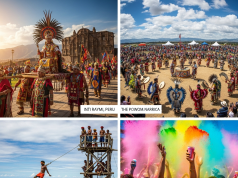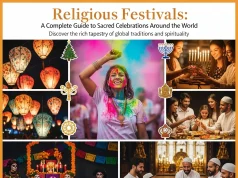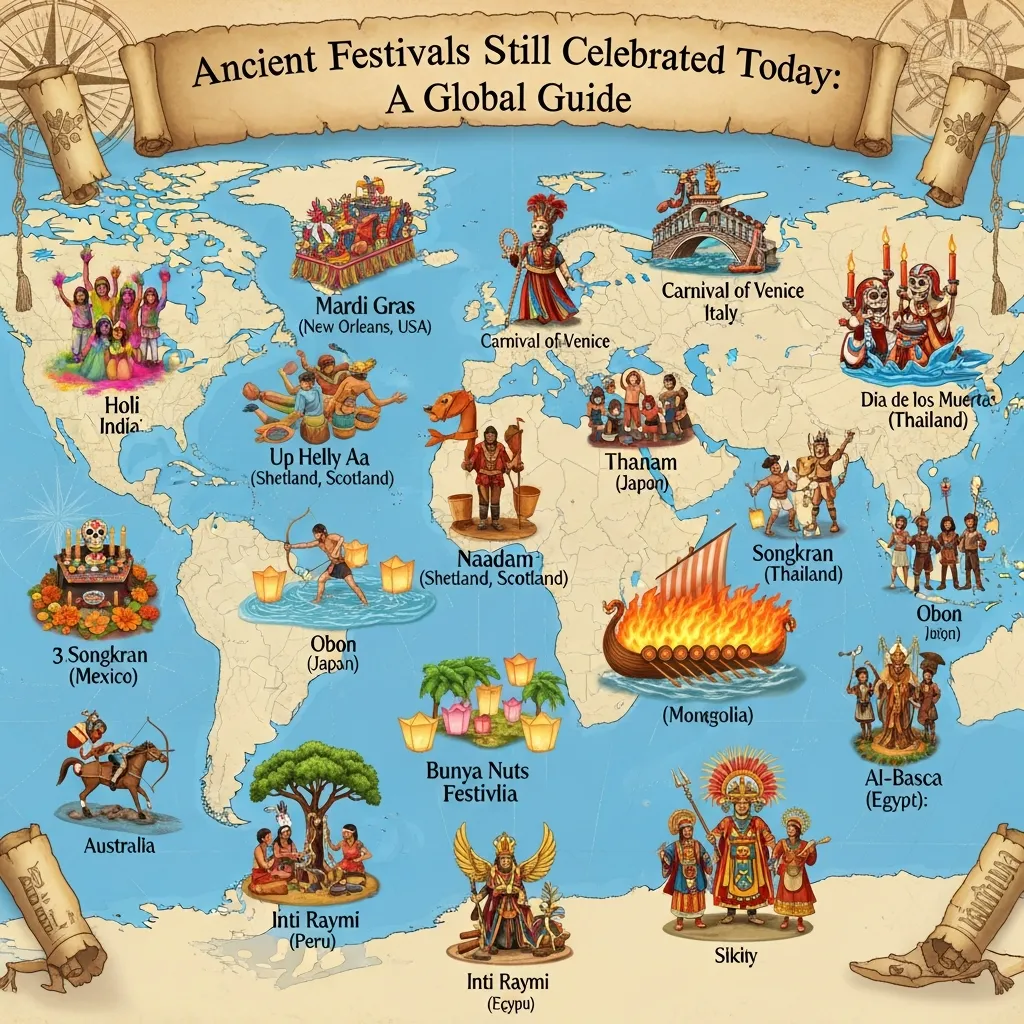
Ancient festivals still celebrated today span every continent and culture, from Diwali and Passover to Indigenous solstice gatherings and lunar ceremonies. These living traditions persist because they fulfill deep human needs—community, identity, spirituality, and connection to the natural world. This guide explores their origins, significance, and what modern travelers should know before attending.
Thousands of years have passed since humans first lit fires in honor of the sun, offered prayers at harvest time, or danced beneath a full moon to call upon their ancestors. Yet remarkably, those same celebrations continue to draw millions of people every year. Ancient festivals still celebrated today are not relics frozen in time—they are living, breathing traditions that have adapted, survived, and in many cases, grown stronger.
What makes a festival last for millennia? The answer is layered. Some traditions endure because of religious conviction. Others survive through sheer cultural will, passed from grandparent to grandchild like a carefully guarded flame. And some have simply proven too meaningful—too tied to human experience—to ever be abandoned.
This blog post maps the rich landscape of ancient celebrations that remain part of modern life. From Indigenous festivals around the world to grand religious observances and mysterious night-time festivals, we explore what these traditions mean, why they matter, and how today’s travelers can experience them responsibly.
Section 1: The Timeless Tapestry of Global Celebrations
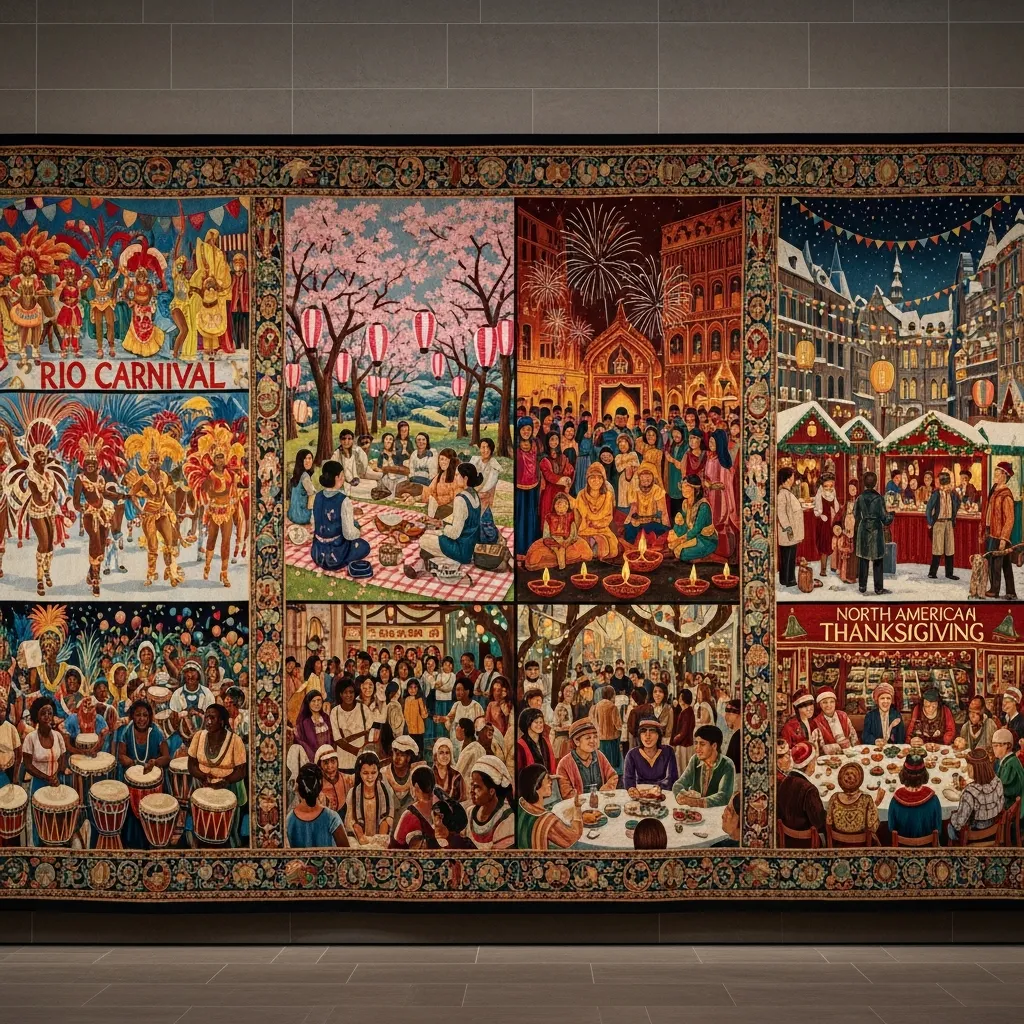
What exactly qualifies as an “ancient festival”?
A festival can broadly be defined as a communal event organized around a shared purpose—religious, agricultural, astronomical, or cultural. When that event has roots stretching back hundreds or thousands of years and continues to be observed in some recognizable form today, it earns the label “ancient.”
Ancient festivals still celebrated today range from events documented in sacred texts—like the Jewish Passover, which dates back over 3,000 years—to oral traditions observed by Indigenous communities long before written records existed. The key is continuity: a living connection between past practice and present community.
Why does continued celebration matter culturally?
Festivals are one of humanity’s most powerful tools for preserving culture. Language can fade. Architecture can crumble. But a community that gathers annually to perform the same songs, prepare the same foods, and honor the same stories is actively resisting cultural erasure. UNESCO recognizes this, having inscribed dozens of festival traditions on its Intangible Cultural Heritage list, including Nowruz (Persian New Year) and the Carnival of Binche in Belgium.
Festivals also serve a social function. They mark time, create shared memory, and reinforce group identity. In fragmented modern societies, that function may be more valuable than ever.
Section 2: Indigenous Festivals Around the World
How do Indigenous festivals connect communities to nature and ancestors?
Indigenous festivals around the world are among the oldest continuous celebrations on Earth. Many are rooted in ecological cycles—the planting season, the migration of animals, the flooding of rivers—and serve as ceremonial acknowledgments of humanity’s dependence on the natural world.
The Blessingway ceremony of the Navajo Nation in the American Southwest, for example, is a multi-day ritual that honors life transitions and restores harmony between a person and their environment. In Australia, Aboriginal communities observe Reconciliation Week alongside ancient ceremonial gatherings called corroborees, which use song, dance, and storytelling to transmit knowledge across generations.
In the Amazon basin, various Indigenous groups observe festivals tied to seasonal flooding and planting. These events often involve intricate body painting, music, and communal feasting—rituals that look very different from a Western festival but serve the same core purpose: reinforcing the bonds between people, their land, and their shared story.
How do Indigenous festivals foster a sense of community?
The communal architecture of Indigenous festivals is one of their defining features. Unlike many modern events built around passive spectatorship, Indigenous celebrations typically require active participation. Every member of a community has a role—elder, dancer, storyteller, cook, or child being initiated into tradition. This participatory structure is precisely what makes these festivals so effective at building unity and transmitting cultural knowledge.
What challenges do Indigenous communities face in protecting their festival traditions?
Colonization, forced displacement, and the suppression of Indigenous languages have placed enormous pressure on these traditions. Many ceremonies were actively banned in countries including Canada and the United States well into the 20th century.
Today, however, a significant revival is underway. Communities across North America, Australia, New Zealand, and South America are reclaiming ceremonial practices, supported by cultural organizations, universities, and in some cases, national governments. The resilience of Indigenous festivals around the world is a testament to the human instinct to preserve what is sacred.
Section 3: Religious Festivals — Echoes of Antiquity in Modern Faith
How have ancient religious observances evolved over thousands of years?
Religious festivals are perhaps the most well-documented of all ancient celebrations. Unlike oral traditions, many religious festivals have written records stretching back millennia, allowing scholars to trace their evolution in remarkable detail.
What emerges from that history is a pattern of adaptation. Rituals shift to accommodate new geographies, political realities, and theological developments. Yet the core meaning—the commemoration of a divine event, a spiritual truth, or a communal obligation—tends to remain intact.
What are some of the best-known ancient religious festivals still practiced today?
Diwali, the Hindu Festival of Lights, is one of the world’s most widely observed religious festivals, celebrated by over a billion people globally. Its origins lie in ancient Hindu texts and the harvest traditions of the Indian subcontinent, with references appearing in Sanskrit literature dating back more than 2,500 years. Today, Diwali spans five days, involves the lighting of oil lamps (diyas), and is observed by Hindu, Jain, Sikh, and some Buddhist communities.
Passover, or Pesach, commemorates the liberation of the Israelites from Egyptian slavery as described in the Book of Exodus. Observed for over 3,000 years, Passover remains one of the most widely celebrated Jewish holidays, marked by the Seder meal, the retelling of the Exodus narrative, and the avoidance of leavened bread for eight days.
Easter traces its roots to early Christian observances of the resurrection of Jesus Christ, but its timing—tied to the spring equinox—also reflects pre-Christian astronomical traditions. Some Easter customs, including egg decoration and spring imagery, echo older fertility festivals observed across Europe long before Christianity.
How do faith, culture, and modern life intersect at religious festivals?
For many participants, religious festivals occupy a space where the sacred and the social overlap. Attending Christmas Mass, breaking the Ramadan fast with family, or lighting Hanukkah candles is simultaneously an act of faith and a deeply cultural one. As religious affiliation becomes more fluid in many parts of the world, some people engage with these festivals primarily as cultural events, stripping away doctrinal content while retaining ritual and community.
Section 4: Night-Time Festivals — Illuminating the Past
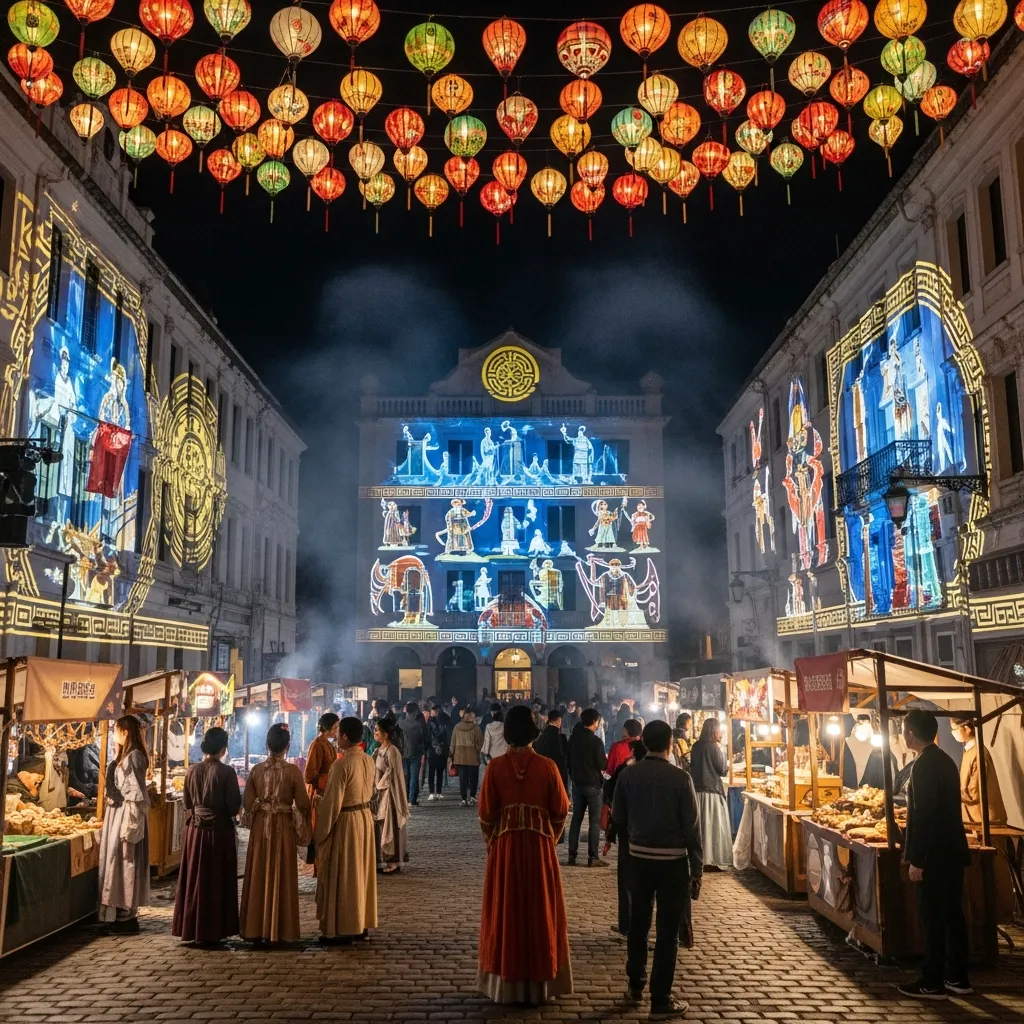
What makes night-time festivals so enduring and powerful?
There is something primal about gathering in the dark. Long before electric lighting changed the nature of nighttime, human communities organized significant ceremonies around darkness, fire, and celestial events. Night-time festivals occupy a special place in the global calendar of ancient festivals still celebrated today precisely because they tap into that oldest of instincts: the need to understand and honor the sky above.
What are the astronomical roots of ancient night-time festivals?
Many ancient night-time festivals were originally astronomical in nature, designed to mark solstices, equinoxes, or lunar cycles. The winter solstice—the longest night of the year—inspired celebrations across cultures, from the Norse Yule to the Roman Saturnalia. Both traditions contributed elements to modern Christmas celebrations.
The Mid-Autumn Festival, celebrated across China, Vietnam, and other parts of East and Southeast Asia, falls on the 15th day of the eighth lunar month, when the moon is at its fullest and brightest. Dating back over 3,000 years, the festival involves mooncakes, lanterns, and communal moon-gazing—a practice rooted in ancient lunar worship and harvest thanksgiving.
In Iran, Yalda Night (Shab-e Yalda) marks the winter solstice and has been observed for at least 2,000 years. Families gather to read poetry, eat pomegranates and watermelon, and stay awake through the longest night—a ritual of collective endurance and hope for the returning sun.
How are ancient night-time rituals interpreted in the modern world?
Contemporary observers of these festivals often blend ancient symbolism with modern aesthetics. Lantern festivals, fire ceremonies, and candle-lit processions have found new audiences through social media and cultural tourism. Night-time festivals have become some of the world’s most photographed events—a development that carries both opportunity and risk for the communities that host them.
Section 5: Beyond the Festivities — Practicalities for the Modern Traveler
What should modern travelers know before attending an ancient festival?
Attending an ancient festival as an outsider is one of the most memorable travel experiences available, but it requires preparation. Research the festival’s religious or cultural significance before you arrive. Understand whether attendance by outsiders is welcomed, tolerated, or discouraged. Some sacred ceremonies are genuinely closed to non-community members, and attempting to observe them without permission is disrespectful regardless of intent.
Timing is critical. Many festivals follow lunar or agricultural calendars, meaning dates shift year to year. Local tourism boards and cultural organizations typically publish schedules well in advance.
What are the essential travel accessories for women attending ancient festivals?
Packing for a festival—especially one held in a remote, rural, or historically significant setting—requires practical thinking. Travel accessories for women attending ancient festivals should balance cultural sensitivity with comfort.
- Modest, breathable clothing: Many religious and Indigenous festivals require covered shoulders, knees, or heads. Lightweight scarves and wraps are essential travel accessories for women visiting temples, mosques, or sacred sites.
- Comfortable, sturdy footwear: Ancient festivals often involve standing for long periods, walking on uneven ground, or removing shoes at entry points.
- A crossbody bag or anti-theft backpack: Crowded festival environments call for secure, hands-free bag options.
- A reusable water bottle and snacks: Festivals in remote locations may have limited food stalls; staying hydrated is critical.
- A compact first aid kit: Including blister plasters, pain relief, and any personal medications.
- A portable phone charger: For navigation, translation apps, and capturing memories.
How can travelers practice responsible tourism at ancient festivals?
Responsible tourism at ancient festivals begins with the recognition that you are a guest. Ask before photographing people or ceremonies. Spend money at local vendors rather than international tour operators. Learn a few words of the local language. Follow dress codes and behavioral guidelines without being asked. And consider the environmental impact of your attendance—some festivals in ecologically sensitive areas are under strain from over-tourism.
Section 6: The Resurgence and Future of Ancient Celebrations
How are communities reviving lost festival traditions?
A growing number of communities around the world are actively working to revive festivals that were suppressed, forgotten, or nearly lost. In Greece, scholars and cultural organizations have worked to reconstruct ancient Hellenic religious festivals based on historical texts. In Japan, the Onbashira festival in Suwa—in which enormous logs are ridden down steep hillsides—continues to be practiced every six years despite modernization pressures, because community members consider its preservation non-negotiable.
Digital technology is playing an unexpected role in revival efforts. Social media platforms allow diaspora communities to connect with ancestral practices. Online archives preserve oral histories and ceremonial knowledge. Younger generations are using these tools to engage with traditions their grandparents observed.
What impact does globalization have on ancient festival practices?
Globalization is a double-edged force for ancient festivals. On one hand, increased connectivity spreads awareness of celebrations that were once purely local, attracting tourists, funding, and international recognition. On the other, commercial pressure can hollow out a festival’s meaning—turning a sacred agricultural rite into a photo opportunity.
The most resilient festivals tend to be those governed by strong community ownership. When the people who originated a tradition control how it is shared and who participates, the core meaning is more likely to survive.
What strategies help ensure the long-term survival of ancient festivals?
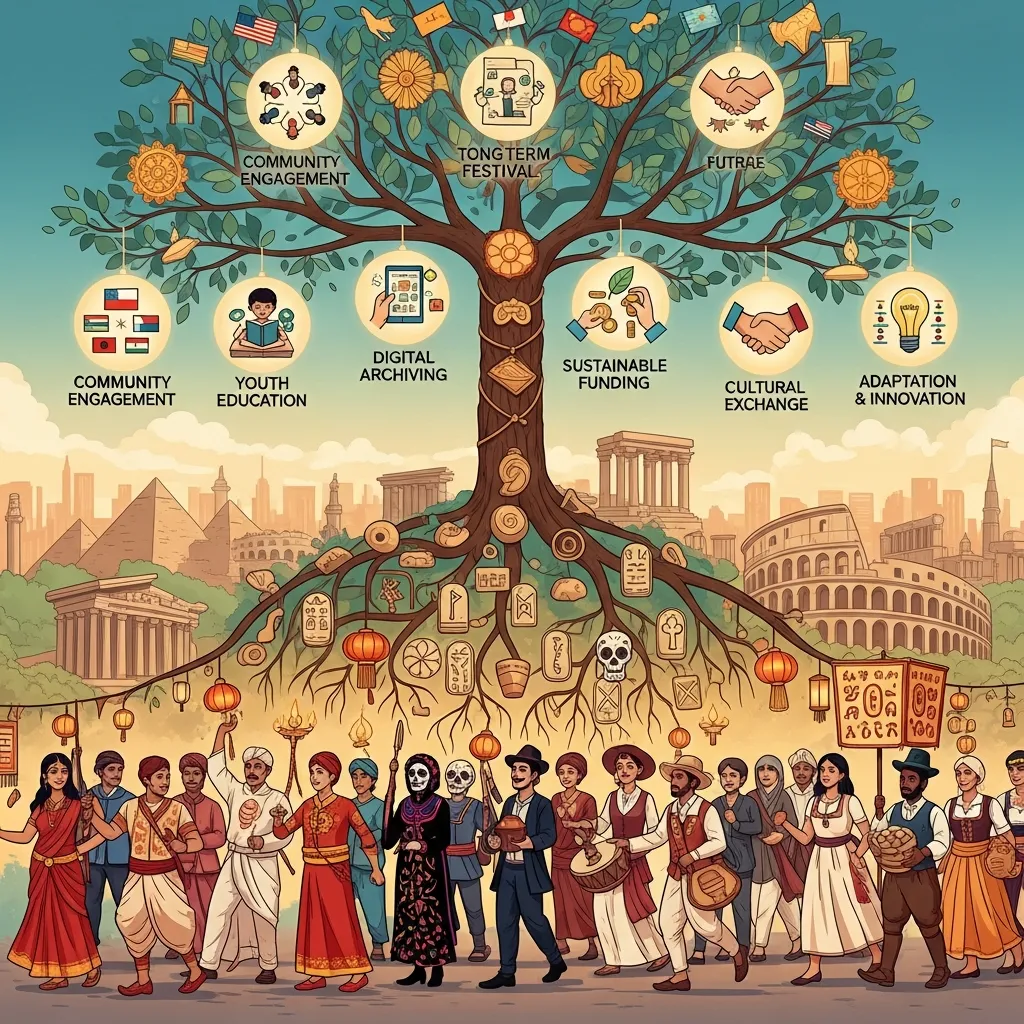
Cultural preservation requires both grassroots commitment and institutional support. UNESCO’s Intangible Cultural Heritage program offers international recognition that can mobilize resources and political will. At the local level, mentorship programs pairing elders with young community members are among the most effective tools for transmission. Schools that incorporate festival traditions into curricula also play a significant role.
Ultimately, ancient festivals still celebrated today survive because communities choose to make them survive—generation after generation, through changing economies, political upheavals, and cultural shifts.
Conclusion: The Undying Flame of Tradition
Ancient festivals still celebrated today are more than colorful events on a travel itinerary. They are evidence of something persistent in human nature—the need to mark time, honor the past, and belong to something larger than the individual.
From the fire-lit nights of Yalda to the rhythmic ceremonies of Indigenous festivals around the world, from the shared meals of Passover to the lantern-filled skies of the Mid-Autumn Festival, these celebrations remind us that history is not only written in books. It is danced, sung, cooked, and lit up in the night sky.
If you have the opportunity to witness or participate in an ancient festival—do so thoughtfully, humbly, and with genuine curiosity. Pack your travel accessories for women wisely, respect the communities that welcome you, and come ready to be moved. These traditions have outlasted empires. They deserve your full attention.
Frequently Asked Questions
What defines an “ancient festival”?
An ancient festival is a communal celebration with documented or oral origins stretching back hundreds or thousands of years, which continues to be observed in a recognizable form by a living community today. Examples include Diwali, Passover, and Indigenous solstice ceremonies.
Why are some ancient festivals still celebrated today?
Ancient festivals persist because they fulfill enduring human needs—spiritual expression, cultural identity, communal bonding, and the marking of seasonal or astronomical cycles. Communities actively choose to maintain them as acts of cultural survival and shared meaning.
How do Indigenous festivals differ from modern celebrations?
Indigenous festivals around the world typically require active community participation rather than passive attendance, are rooted in specific relationships between a people and their land, and transmit sacred or ecological knowledge that is central to group identity. They are rarely spectator events.
What is the significance of night-time festivals?
Night-time festivals have ancient roots in astronomical observation—solstices, equinoxes, and lunar cycles. Gathering in darkness around fire or candlelight serves symbolic purposes across many cultures, representing hope, spiritual awareness, and collective endurance through uncertainty.
Can I attend ancient religious festivals as a non-believer?
Many religious festivals welcome respectful outside observers, including Diwali celebrations and Lunar New Year events. However, some sacred ceremonies—particularly in Indigenous communities—are closed to outsiders. Always research the specific festival and seek guidance from local cultural authorities before attending.
What are the most useful travel accessories for women attending ancient festivals?
Essential travel accessories for women include modest, breathable clothing that meets local dress codes, comfortable and durable footwear, a secure crossbody bag, a reusable water bottle, a portable phone charger, and a compact first aid kit. A lightweight scarf is especially versatile for visiting religious sites.
How can I be a responsible tourist when attending ancient festivals?
Practice responsible tourism by researching the festival’s cultural significance in advance, following all dress codes and behavioral guidelines, asking permission before photographing people or rituals, supporting local vendors, and minimizing your environmental impact. Approach the experience as a guest, not a consumer.
Are there efforts to revive ancient festivals that are no longer widely celebrated?
Yes. Cultural organizations, universities, and community groups in many countries are actively reconstructing or revitalizing festivals that were suppressed or lost. Digital archives and social media have also helped diaspora communities reconnect with ancestral traditions and support revival efforts.
How do ancient festivals contribute to cultural identity?
Festivals reinforce cultural identity by creating shared memory, transmitting intergenerational knowledge, and marking a community’s unique relationship with history, land, and belief. UNESCO recognizes festival traditions as a form of Intangible Cultural Heritage precisely because of this identity-building function.
What impact does modernization have on traditional festival practices?
Modernization can dilute festival meaning through commercialization and over-tourism, but it can also support preservation through digital documentation and global awareness. The key factor is community ownership—festivals governed and interpreted by the originating community tend to retain their authenticity.
Where can I find information about ancient festivals happening near me or while traveling?
UNESCO’s Intangible Cultural Heritage website, national tourism boards, and local cultural organizations are reliable starting points. Travel platforms such as Culture Trip and responsible tourism operators also publish festival calendars. Always cross-reference multiple sources to confirm dates, which often follow lunar or agricultural calendars.
What is the main takeaway regarding ancient festivals still celebrated today?
Ancient festivals still celebrated today survive not by accident but by choice—the collective decision of communities, generation after generation, to preserve what matters most. They offer modern participants a rare window into humanity’s shared past and a reminder that tradition, practiced with intention, is one of our most powerful tools for cultural continuity.